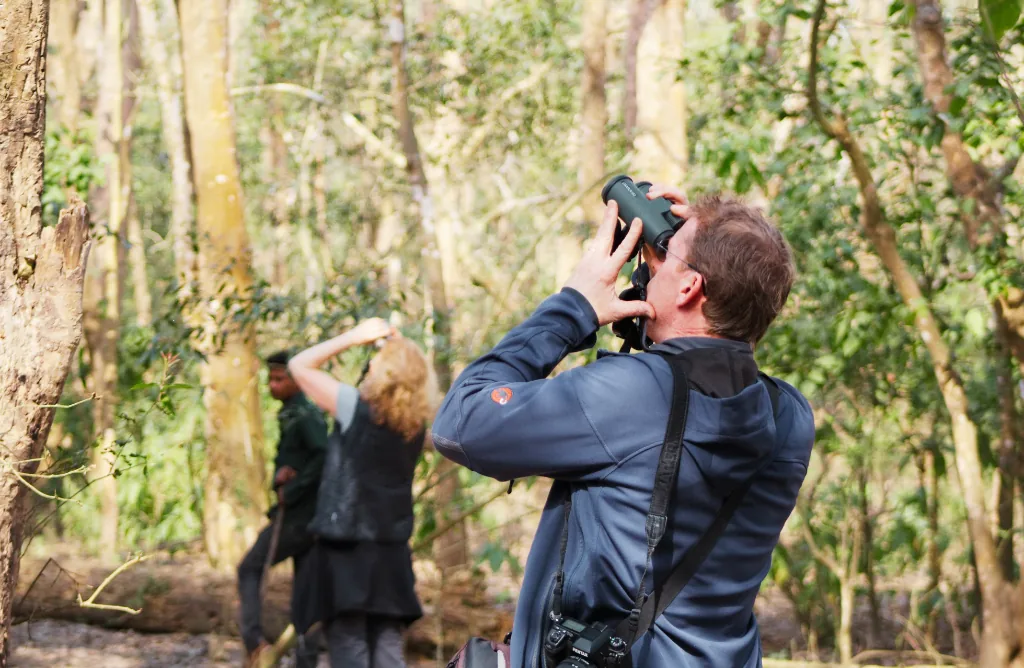
Shuklaphanta National Park is one of the most rewarding birding sites in Nepal, and one of the quietest. Its open phanta grasslands protect birds that have vanished from most of South Asia, while sal forest and wetlands add hundreds more species. BirdLife International lists it as an Important Bird Area, and more than 460 species have been reported here, although totals vary between surveys.
Target species
Grassland specialists
- Bengal florican: Critically Endangered, and the bird most birders come for. The park holds one of Nepal's two largest populations, centred on the main phanta.
- Swamp francolin: a tall wet-grassland species at the western edge of its range here.
- Bristled grassbird, Jerdon's babbler and Finn's weaver: scarce grassland birds for which the park is important.
- White-throated bushchat: another grassland bird with a significant population here.
Wetland birds
- Sarus crane: the world's tallest flying bird.
- Painted stork and bar-headed goose: look for bar-headed geese in winter.
- Kingfishers, osprey and fish eagles: along rivers and around water.
Forest and garden birds
- Hornbills, parakeets, rollers and owls: in sal forest and at the edges.
- Indian peafowl: common, and often seen around the grasslands and clearings.
- Sunbirds and many others: our gardens are a good place for an easy first hour.
Where to go birding
| Habitat | What to look for |
|---|---|
| Open phanta | Bengal florican, grassland warblers, raptors, swamp deer as a bonus |
| Wetlands and lakes | Storks, cranes, waterfowl and kingfishers. Rani Tal is the park's best-known lake. |
| Sal forest | Hornbills, woodpeckers, owls and forest flocks |
| Our gardens | Sunbirds, parakeets and common resident birds, with no permit needed |
When to go
October to March is the best period, when winter migrants join the resident birds. Spring brings breeding displays, including the florican season. Safaris usually stop for the monsoon from early July, so plan a park visit for the safari season. See our month-by-month guide.
Plan a birding day
- 6:00 AM: a short walk in our gardens, then into the park at first light.
- 6 to 9 AM: the phanta and wetlands, when birds are most active.
- Late morning: back for breakfast and a rest.
- Late afternoon: an afternoon drive or a walk, then sunset from the rooftop.
What to bring
- Binoculars and a field guide or birding app
- A long lens if you photograph birds
- Neutral clothing, with warm layers for winter mornings
- Your passport or ID for the park permit
Quick answers
How many bird species are in Shuklaphanta National Park?
More than 460 species have been reported. Published totals vary by source and survey date.
Can I see the Bengal florican at Shuklaphanta?
Yes, it is possible, and the park is one of the species' strongholds in Nepal. It is rare, so a local guide and an early start give you the best chance.
What is the best month for birding?
Any time from October to March. Mornings from 6 to 9 AM are the most productive.
Do you offer bird guides?
Yes. We can arrange an experienced local guide along with your park permit and transport.
Keep planning your trip
Sources: BirdLife International site factsheet, Key Biodiversity Areas and Nepal Traveller.